
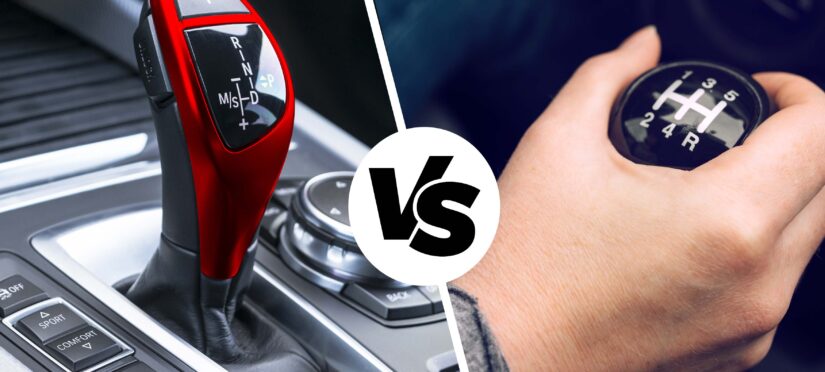
A manual transmission can be durable and satisfying to own. That does not mean every manual is more reliable than every automatic. Design, condition, maintenance, previous use and repair costs matter more than the label on the shifter.
For a used-car buyer, the useful question is specific: what transmission is in this car, what is its condition, and what would the likely repairs cost?
Separate Maintenance, Wear and Failure
Scheduled maintenance is the work a manufacturer specifies to keep the system operating properly. Wear items have a finite service life. A failure is a fault that prevents normal operation. Mixing all three together produces misleading claims about which gearbox is cheapest.
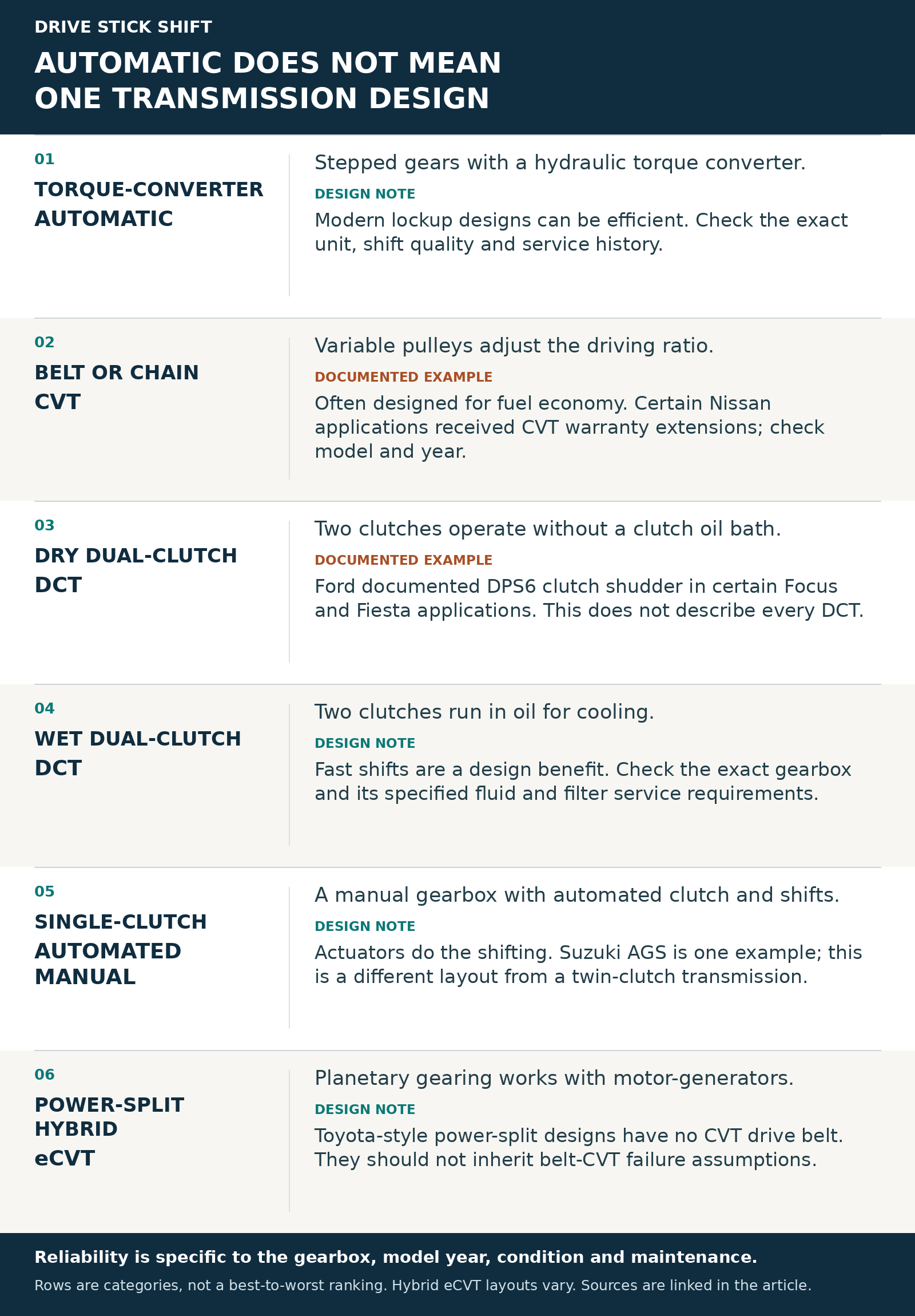
A conventional manual may eventually need clutch or release-system work even if its gears are sound. Depending on the vehicle, the repair can involve hydraulics, bearings or a dual-mass flywheel as well as the clutch friction components. Labor and access can make the total larger than the price of a clutch kit.
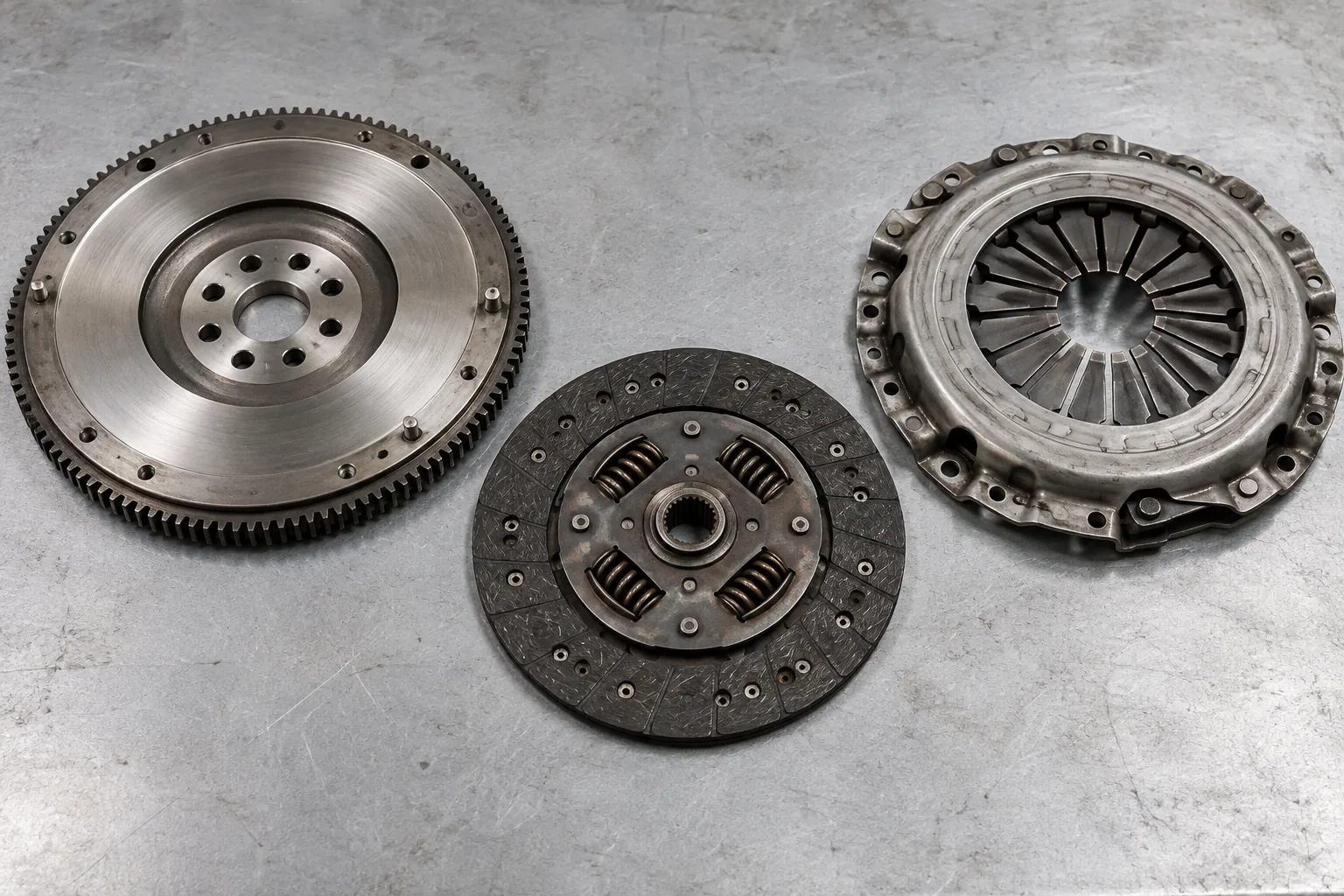
Automatic Transmissions Are Not One Design
A torque-converter automatic, single-clutch automated manual, dual-clutch transmission and belt or chain CVT use different mechanisms and service procedures. A power-split hybrid eCVT is different again. Broad statements about all automatics ignore those differences.
Identify the exact model year, engine and transmission combination. Research its maintenance requirements and known concerns, then assess the actual car. A well-maintained example of a suitable design may be a better purchase than a neglected manual with a desirable reputation.
Manufacturer Sources for the Comparison
ZF automatic transmissions; Toyota belt-CVT design; Volkswagen wet and dry DSG; Suzuki automated manual / AGS; Toyota power-split hybrid system; Nissan CVT warranty bulletin; Ford historical DPS6 shudder bulletin.
What to Check Before Buying a Manual
- Review service records and ask about the car’s history. Ask about maintenance, modifications, and parts that have been repaired or replaced, especially transmission lubricant, the clutch, flywheel and hydraulics. Request receipts or other documentation where available.
- Arrange an independent pre-purchase inspection (PPI). Have an independent inspector evaluate the car and test its operation and functions, including leaks, noises, clutch engagement and gear-selection quality.
The FTC recommends independent inspection as part of used-car buying. A history report and a short drive cannot replace a mechanical assessment. Do not force shifts or conduct abusive high-gear stall tests to check a clutch.
Symptoms Need Diagnosis, Not Assumptions
Engine speed rising without corresponding acceleration can indicate clutch slip, but wear is not the only possible cause. ZF lists release-system problems and contamination among the possible causes. A difficult shift does not automatically prove the entire gearbox needs replacement. A technician should assess the symptoms in context.
Likewise, an occasional beginner stall is not evidence that the transmission has failed. Look for repeatable mechanical symptoms and keep them separate from a skill that is still developing. Our clutch wear and overheating guide explains operating habits that deserve attention.
Can Better Technique Reduce Avoidable Wear?
Yes: avoid resting your foot on the clutch, holding the car on a hill with prolonged clutch slip, or forcing a gear that does not engage. Use a hill-start method appropriate to the vehicle and release the pedal fully when the driving situation permits.
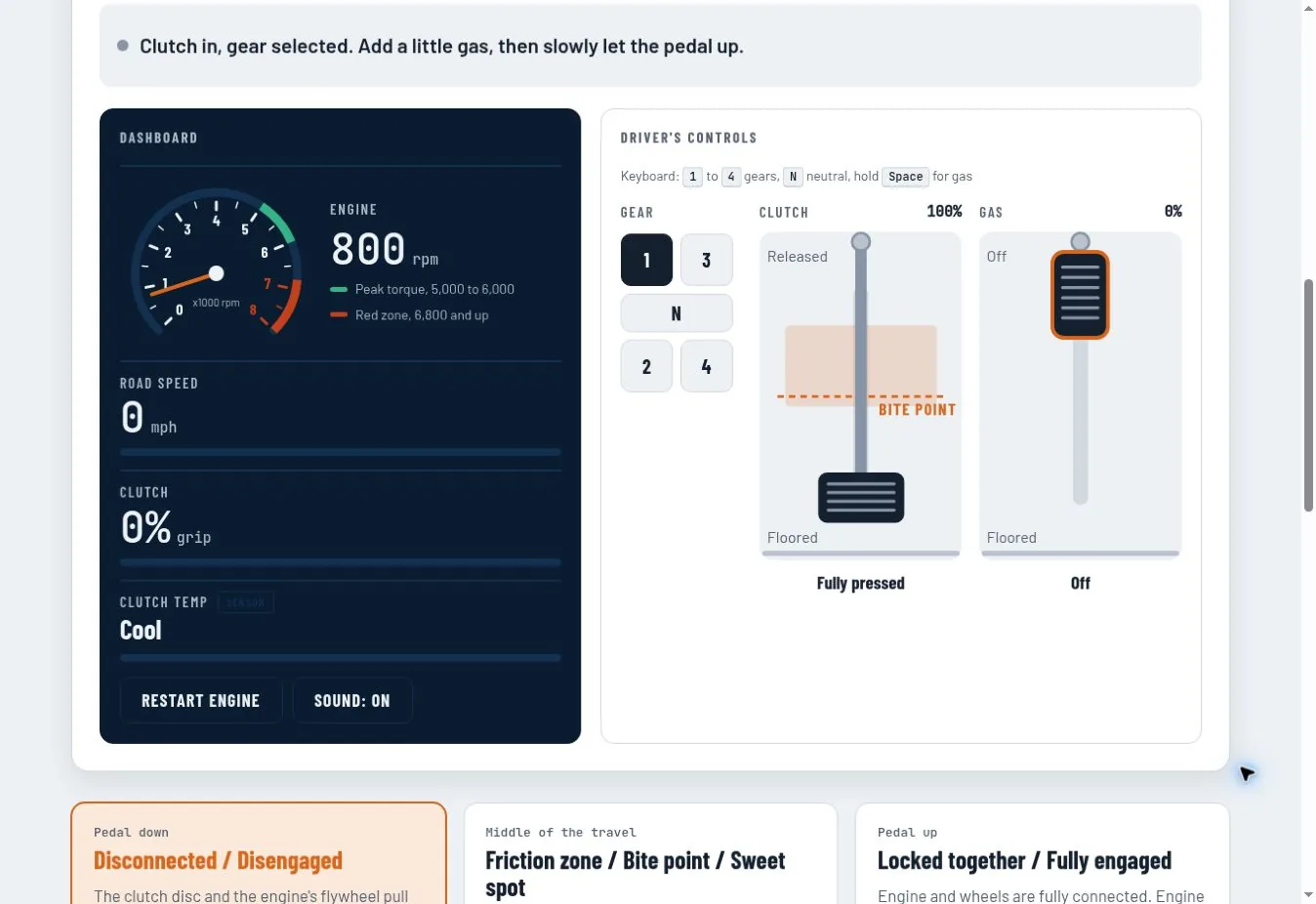
Try Clutch Lab for the concept, or book a stick shift lesson to work on real starts and control. Instruction can improve technique; it cannot repair an existing mechanical fault.
Do Manuals Always Use Less Fuel?
No. FuelEconomy.gov identifies this as a myth: an automatic version can equal or beat its manual counterpart. Compare ratings for the actual vehicles, then consider your driving and ownership costs separately.
Choose a manual because it suits your preferences and the particular car passes inspection. Treat a claim that it will never break or always cost less as a sales pitch, not a maintenance plan.
