
A New York defensive driving course can refresh your road judgment and may provide benefits through the Point and Insurance Reduction Program, known as PIRP. Before enrolling, separate the insurance benefit, DMV point calculation and the driving skills you personally want to improve.
They are related goals, but they are not interchangeable. A course certificate does not erase your driving record or replace practical instruction behind the wheel.
Take the Online Course Through Drive Stick Shift
Drive Stick Shift offers access to a six-hour online New York defensive driving course in partnership with American Safety Institute. Study at your own pace within the provider’s completion window. Course delivery and enrollment are handled by American Safety Institute.
Sign Up for the Online New York Defensive Driving Course
Partner disclosure: Drive Stick Shift may earn a referral commission when you enroll through our partner link.
Understand the Insurance Benefit Precisely
An eligible approved course provides a 10% reduction for three years on the base premiums for liability, no-fault and collision coverage. This does not mean 10% off every charge on the entire insurance bill. Confirm eligibility and the applicable policy components with your insurer.
Point Reduction Has Limits
Eligible completion can exclude up to four points from DMV’s suspension calculation for qualifying violations in the preceding 18 months, once in an 18-month period. It does not delete tickets, convictions or points from the record, create credit for future violations, cancel an existing suspension, or reduce a Driver Responsibility Assessment. Insurance companies use their own point systems.
These benefit summaries follow NY DMV’s PIRP guidance and PIRP regulations. Check the current official rules for your circumstances before relying on a benefit.

Choose the Approved Course That Fits Your Goal
Start by asking why you are enrolling. If you are seeking a policy benefit, ask your insurer what documentation it requires. If points are the concern, review your own record and the official eligibility rules instead of relying on an advertisement’s shorthand.
Next, verify the exact course and sponsoring organization against the DMV list of approved online PIRP providers, or the applicable official classroom listing. A familiar business name or a claim that a course teaches defensive driving is not sufficient by itself. Approval must match the course you are buying.
Before paying, read the provider’s identity-verification, completion, support, certificate-delivery and refund policies. Check that you can complete the required format and that your device works with the provider’s system. Keep the confirmation email and a copy of the terms you accepted.
Make the Material Useful on Your Next Drive
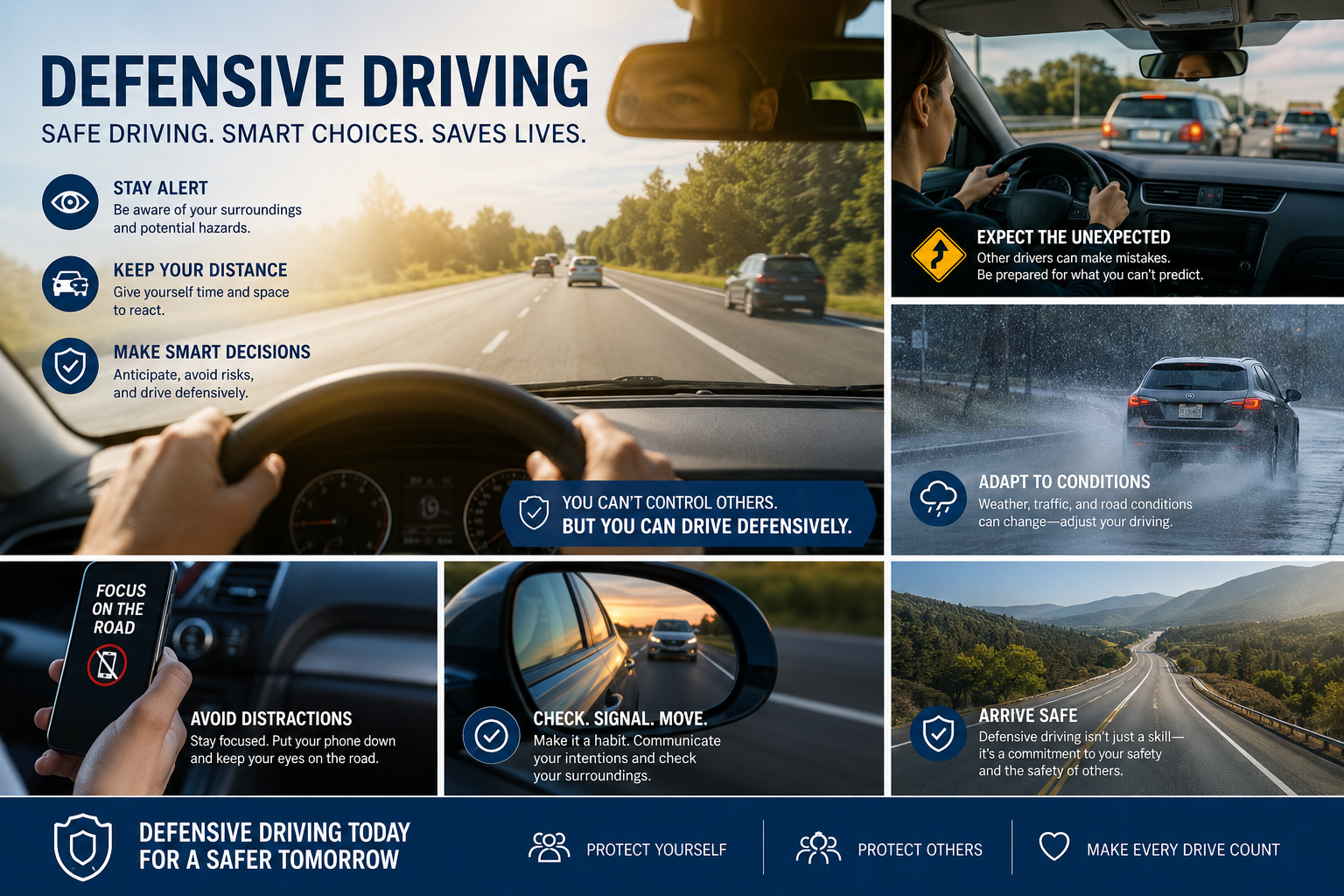
Use the course as a prompt to identify habits you want to change. Pick a few concrete observations: how far ahead you scan, whether your following distance leaves room to respond, and how early you recognize a developing hazard.
Think about a recent difficult drive without turning it into an argument about who was at fault. Where did your available options narrow? Could you have created space earlier, reduced distractions or adjusted your plan for visibility and weather? This makes the material more useful than simply collecting a certificate.
Keep the Paperwork Moving After Completion
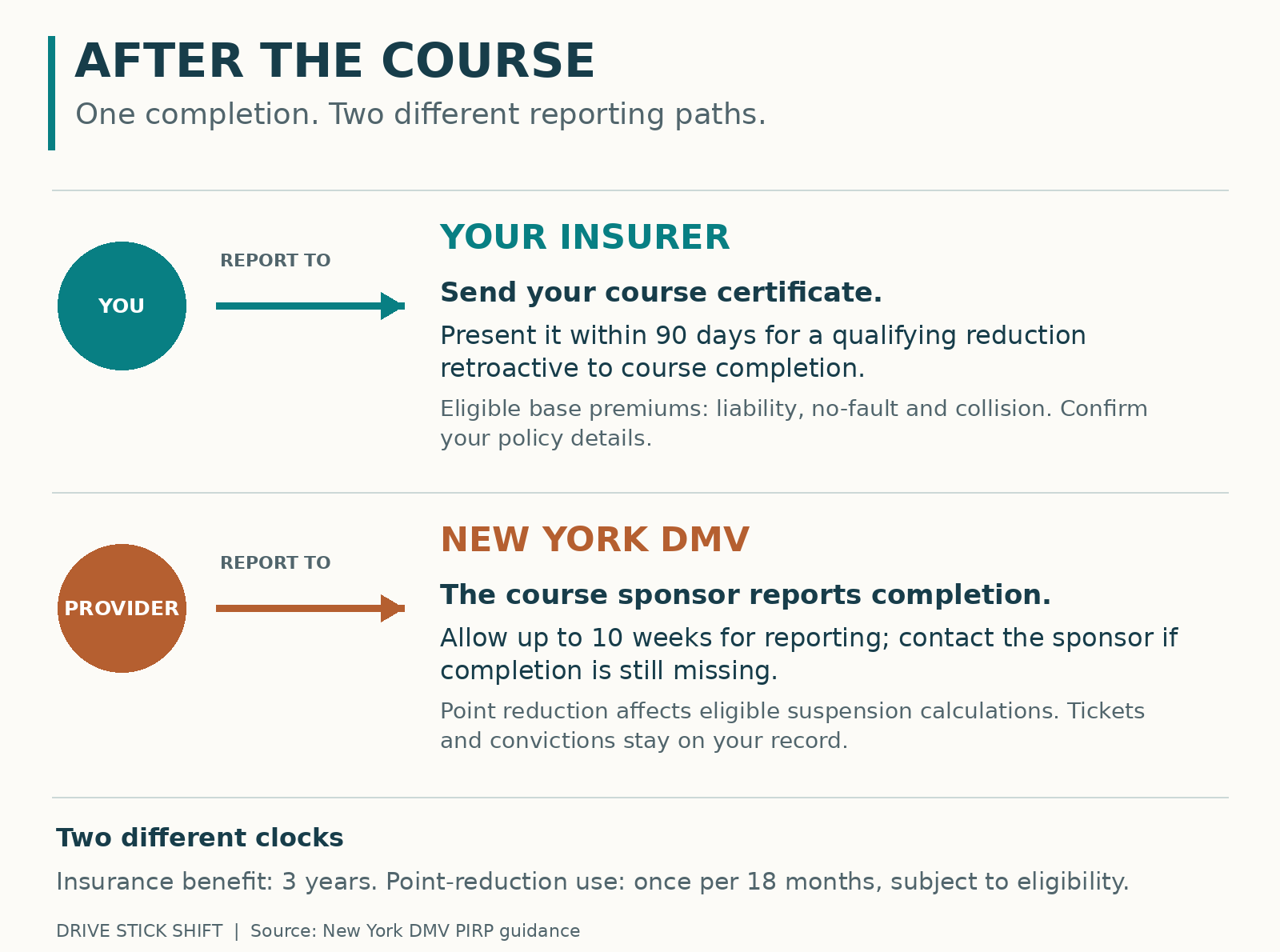
Save your certificate and the provider’s confirmation. Submit the required documentation to your insurer promptly and retain evidence of submission. Follow the provider’s reporting instructions and use the official DMV guidance if a record update needs checking.
Set reminders based on the benefit you want to maintain. Point-reduction eligibility and the three-year insurance benefit do not share the same renewal cycle. Before enrolling again, confirm what the new completion would accomplish for your situation.
Is This the Five-Hour Pre-Licensing Course?
No. Do not buy one course assuming it fulfills the other purpose. Check the exact requirement you are trying to meet and the official approval for that course before checking out.
Does Defensive Driving Teach Stick Shift?
A defensive driving course addresses road awareness and related decisions. Operating a clutch, selecting gears and controlling a manual car at low speed require a different kind of practice. Our stick shift lessons address that practical skill. Neither course should be described as a substitute for the other.
Ready to get started? Enroll in the online New York defensive driving course through Drive Stick Shift’s partnership with American Safety Institute. You can also view our defensive driving course information before signing up.
