
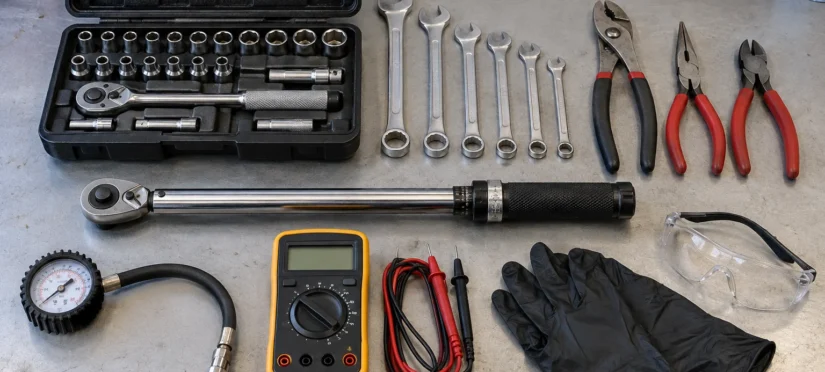
Working on your own car can feel intimidating at first. There are unfamiliar parts, tight spaces and the worry that one wrong move will turn a small job into a big repair. You do not have to understand the entire car or buy a professional workshop to begin. Start with a manageable task, learn what the parts do and build your toolkit as your experience grows.
Knowing the basics is useful even if you eventually hire a mechanic. You can describe a problem more clearly, understand what a repair involves and ask better questions about the work being recommended.
Affiliate disclosure: Some links below are affiliate links. If you buy through them, Drive Stick Shift may earn a commission at no additional cost to you. As an Amazon Associate I earn from qualifying purchases.
Start with a Basic Hand-Tool Set
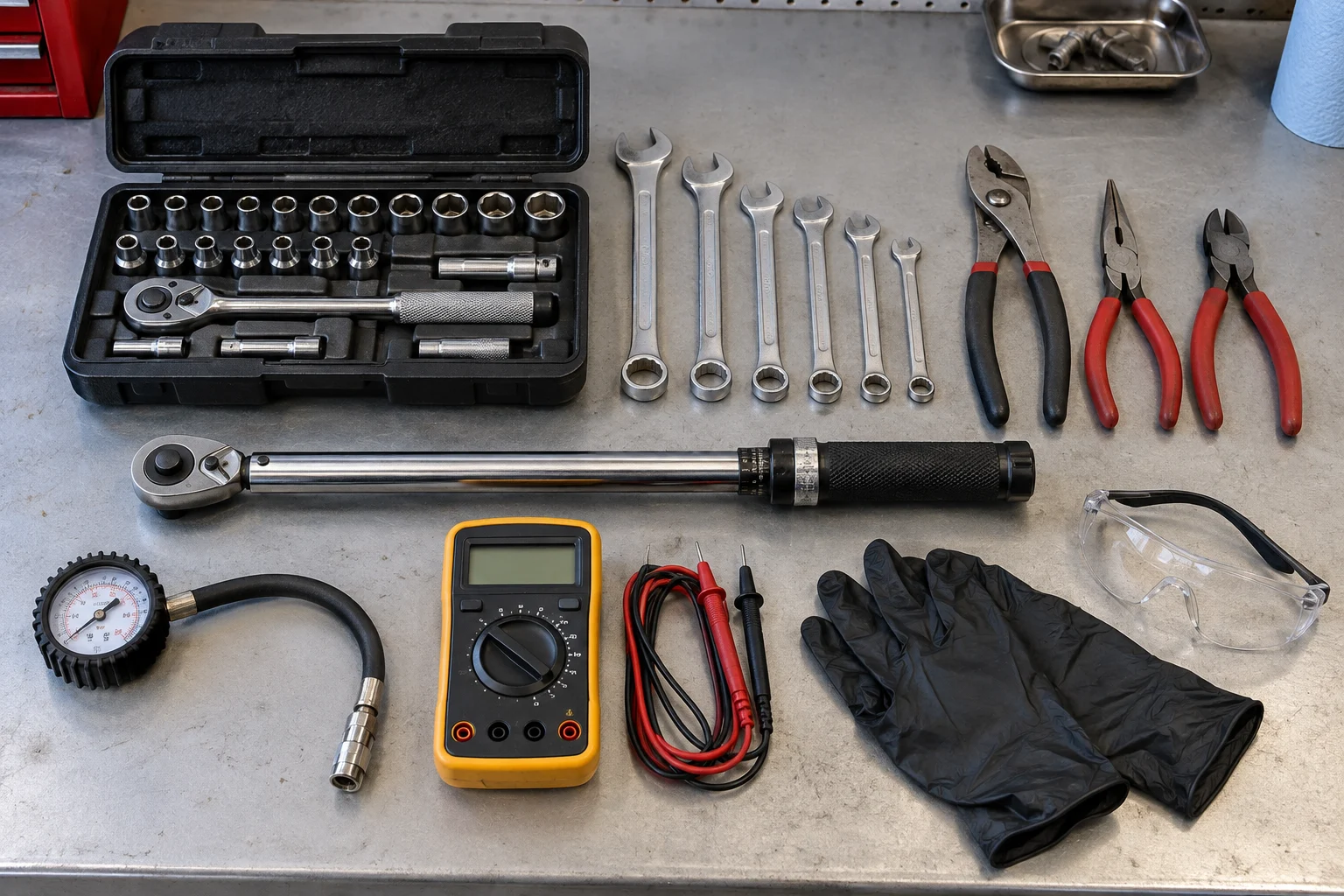
A basic mechanic’s hand-tool set is the foundation I would prioritize. Look for combination wrenches, ratchets, shallow and deep sockets, extensions and hex keys, often called Allen keys. Check the actual contents and sizes against your vehicle before buying; a large piece count is less useful than having the sizes your first jobs need.
Shallow sockets help where space is limited, while deep sockets can reach nuts on longer studs. A ratchet lets you turn a fastener repeatedly without removing the tool after every movement. Choose metric or SAE sizes as appropriate, seat the socket fully and use the correct size rather than forcing a near fit.
Add Pliers and a Light You Can Position
- Pliers set — Useful for gripping, holding and reaching small components when the procedure calls for it. Different shapes have different jobs. Use a socket or wrench on a nut or bolt whenever appropriate; pliers can damage fastener heads.
- Flexible magnetic work light — Seeing the fastener, connector or leak clearly makes a job easier to understand. A positionable light can free both hands while you work. Check that it attaches securely and stays clear of hot or moving parts.
These are practical basics to build around. Add specialized equipment when a planned job calls for it, rather than buying every tool you see in a repair video.
Buy Lifting Equipment When Your Jobs Require It
You can begin with tasks that do not involve raising the car. When you move to work requiring lifting or access underneath, plan the jack, support equipment and working surface together.
- 3-ton low-profile hydraulic floor jack — A lifting option to consider when its clearance, height range, capacity and saddle suit the vehicle and its approved lifting points. Low profile does not guarantee that it fits every car.
- 3-ton jack stands — Support equipment for a properly lifted vehicle. Read the manufacturer’s instructions and confirm whether the stated rating applies to each stand or the pair; do not assume the rating or support arrangement.
A jack lifts the vehicle; correctly positioned, appropriately rated stands support it. Never get under a car supported only by a hydraulic jack. Use the vehicle’s specified lifting and support points, a hard, level surface and wheel chocks as required by the procedure. If you cannot establish a suitable setup, have the job done in a workshop.
Add Measuring Tools as Your Skills Develop
A multimeter becomes useful when you start learning basic low-voltage electrical checks. Understanding what you are measuring and selecting the correct meter setting matter more than simply owning the tool. Learn the circuit and procedure before probing it; high-voltage vehicle systems are not beginner multimeter projects.
A tire-pressure gauge is useful for routine checks using the vehicle’s specified cold pressures. A scan tool can help you read fault information, but a code does not automatically identify the part that needs replacing.
A torque wrench can be a later, job-specific purchase or something you borrow when needed. If the job specifies a tightening torque, including wheel installation, use the correct tool and procedure. It does not need to be the centerpiece of your first shopping list.
Choose a First Job You Can Understand and Verify
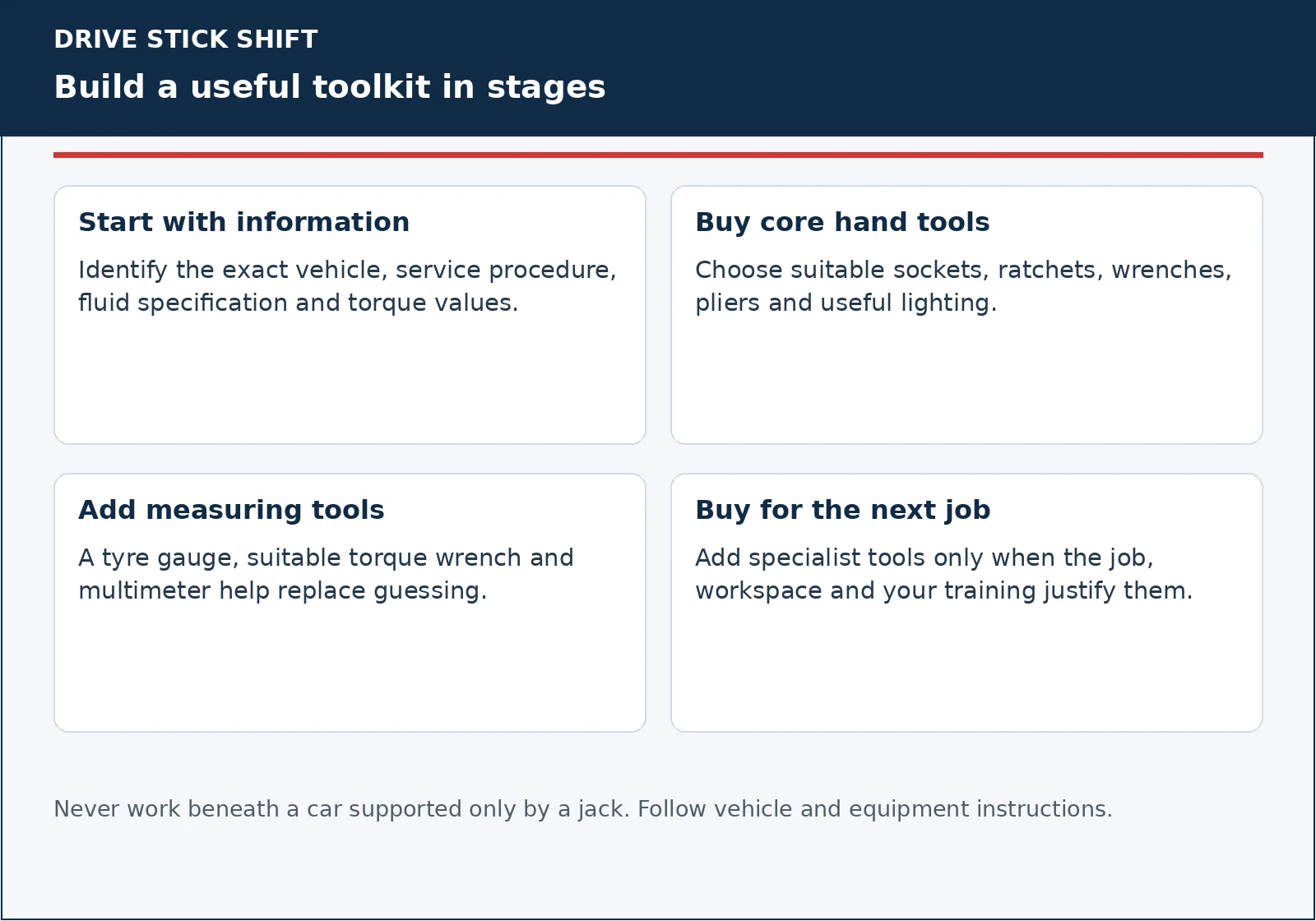
Identify the exact year, model, engine and relevant equipment, then read the owner’s manual and suitable service information. A video for a similar-looking car may show different fasteners, fluids or procedures. List the tools and parts you need before taking anything apart.
Checking pressures, replacing suitable wiper blades or changing an accessible cabin filter can be approachable starting points when you follow the vehicle’s instructions. Choose one task, allow enough time, organize the removed parts and confirm the result before calling it finished.
Work up to more involved repairs as your knowledge develops. Brake work, restraint systems, pressurized fuel systems and high-voltage components call for additional knowledge and precautions. Knowing when to get help is part of becoming capable, not a failure to learn.
Feeling Intimidated? Watch the Process Before Starting
A clear demonstration can make an unfamiliar job much easier to picture. These five automotive creators offer different approaches to learning repairs, maintenance and diagnosis. Choose a topic that fits your car and current experience:
- ChrisFix — Step-by-step DIY repair and maintenance demonstrations. A useful place to start when you want to see the tools, preparation and sequence of a job before trying it yourself.
- EricTheCarGuy — A broad repair and maintenance library covering mechanical work, troubleshooting and explanations of how vehicle systems work. Search for a topic that matches the job you are planning.
- South Main Auto — Real workshop diagnosis and repair. Useful for watching how a technician investigates symptoms, checks information and tests a problem before deciding what needs fixing.
- ScannerDanner — A strong resource for automotive electrical troubleshooting, engine-performance diagnostics and learning how to use test equipment. Some material is advanced; start with the fundamentals of circuits and measurements.
- Humble Mechanic — Particularly relevant to Volkswagen and Audi owners, with repair demonstrations, tool discussions and explanations of common vehicle issues. Check that the example matches your engine and model.
For more automotive learning, visit the Drive Stick Shift YouTube channel. Explore our car projects, tool-related content and explanations, then subscribe for more practical automotive videos. Learning what is happening under the hood can make both car ownership and conversations with your mechanic feel less mysterious.
Use videos to understand the process and decide whether a job fits your ability, workspace and equipment. You do not need to copy an advanced repair just because you have watched someone complete it. A small job done carefully is a useful first success.
Keep Learning How the Car Works
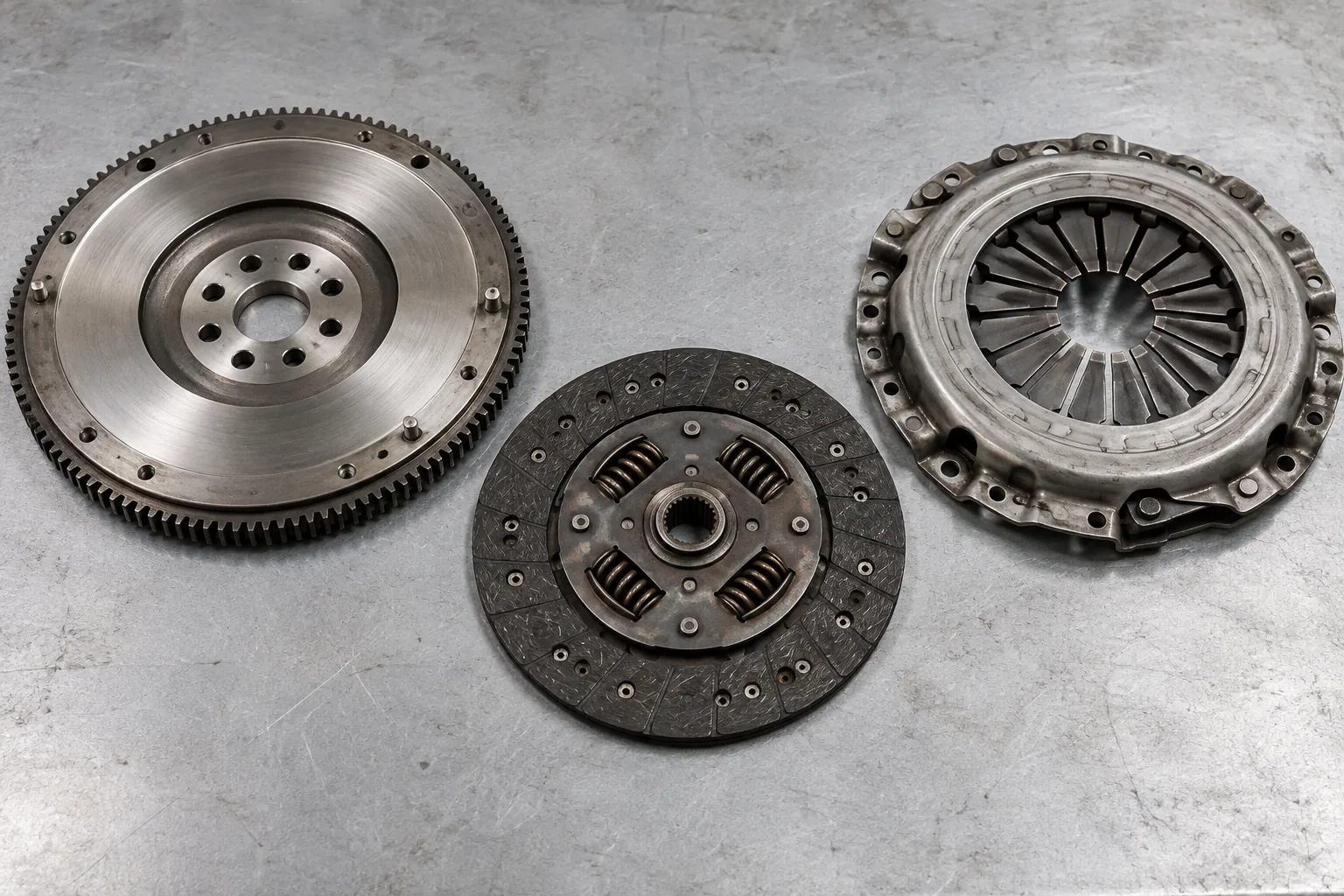
If a manual car’s clutch is your next subject, explore Clutch Lab and our clutch wear guide. They explain engagement and operating habits; they are not a clutch-replacement procedure. For guided practice operating a manual car, view Drive Stick Shift lessons.
Start with the basic hand tools, pliers and useful lighting. Add safe lifting equipment when your jobs require it, then buy other tools for specific tasks. Keep a notebook of the work, parts and observations. The goal is to build understanding and confidence one successful job at a time.
