

A cheap manual car can give you regular practice without the anxiety of learning in your dream car. It can also become an expensive repair project. The useful question is whether this particular car gives you safe, affordable access to the practice you actually need.
Buying makes more sense when you want to keep driving the car after learning. Buying solely to avoid a few lessons deserves a closer look at the numbers.
Count the Full Cost of the Practice Car
Write down the purchase price, estimated resale value, taxes and registration, insurance, inspection, parking, maintenance and likely repairs. Add the time needed to find, collect and eventually sell it. In Brooklyn, a second car also needs a realistic parking plan.
Your working estimate is: purchase price minus realistic resale proceeds, plus ownership costs and repairs. Use a cautious resale estimate. A future buyer is not obligated to refund everything you spent fixing the car.
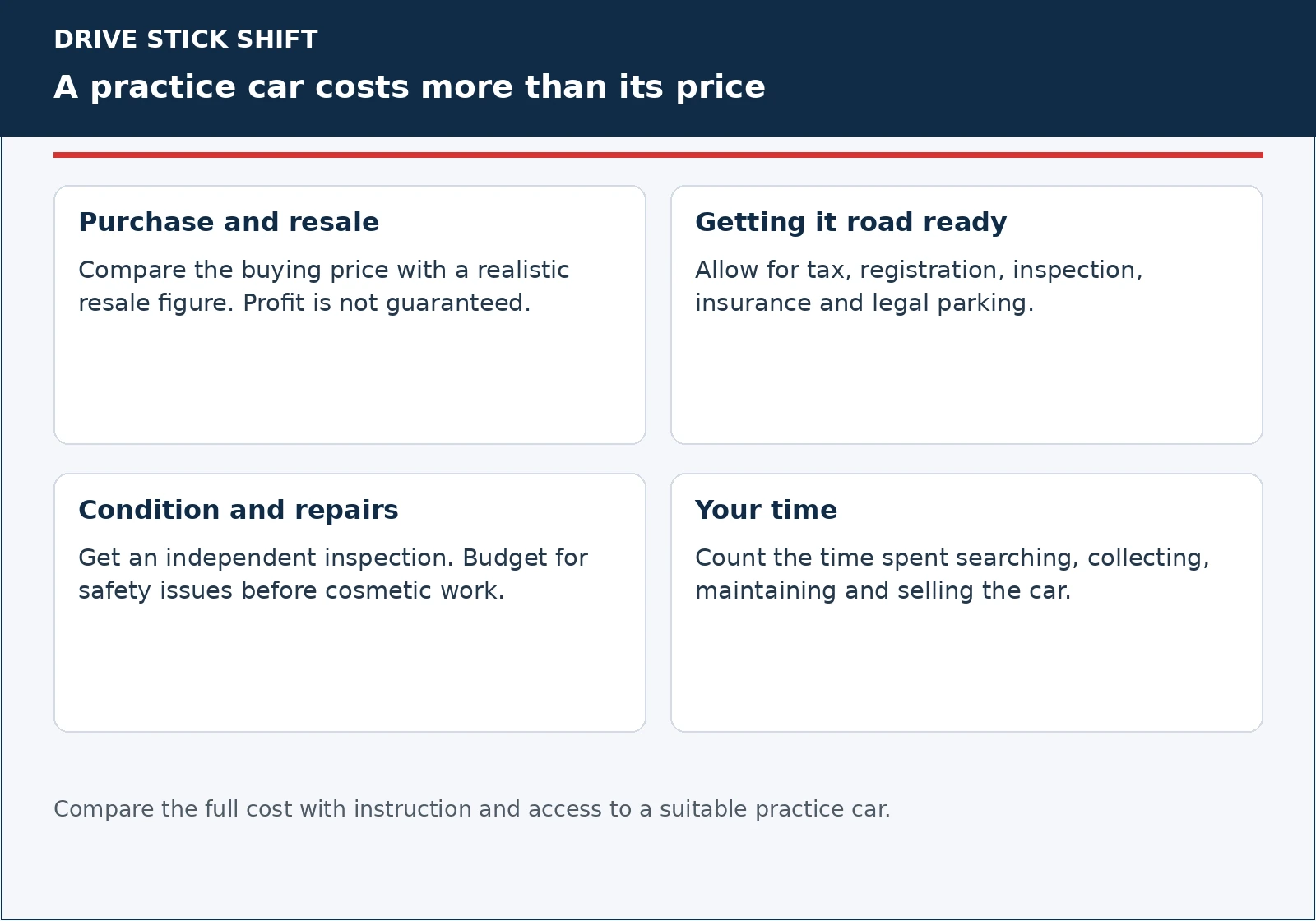
Ask an insurer for a quote on the actual vehicle before committing. A low purchase price does not guarantee low insurance costs. Keep a separate repair reserve; money already allocated to rent or essential bills is not a sensible clutch budget.
Buy Condition Before Horsepower
A predictable stock car with working brakes, sound tires and a healthy clutch is a better classroom than a modified bargain with unresolved problems. Ask for maintenance records and arrange an independent inspection. The FTC’s used-car guide explains why a history report is not a substitute for a mechanical inspection.
- Have the inspector check structural corrosion, leaks, tires, brakes and steering as well as the drivetrain.
- Ask about clutch engagement, release-system operation, gearbox noises and difficult gear selection.
- Identify modifications, warning lights and unfinished repairs. Ask what correcting them would cost before negotiating.
- Check ownership paperwork and the requirements for putting the car legally on the road.
Do not perform aggressive clutch tests or force gears to prove that a car is healthy. If you cannot yet drive manual confidently, arrange a competent driver and inspection rather than making the purchase your first lesson.
Separate Fear of Stalling from Clutch Abuse
An occasional stall while learning does not automatically mean you damaged the clutch. Prolonged slipping under load creates heat: holding a car on a hill with the clutch, adding excessive throttle during a slow start, or keeping the pedal partly pressed unnecessarily can accelerate wear.
Learn what the car is doing before trying to make every start fast. Our guide to clutch overheating and wear explains the difference between a beginner mistake and habits worth correcting.
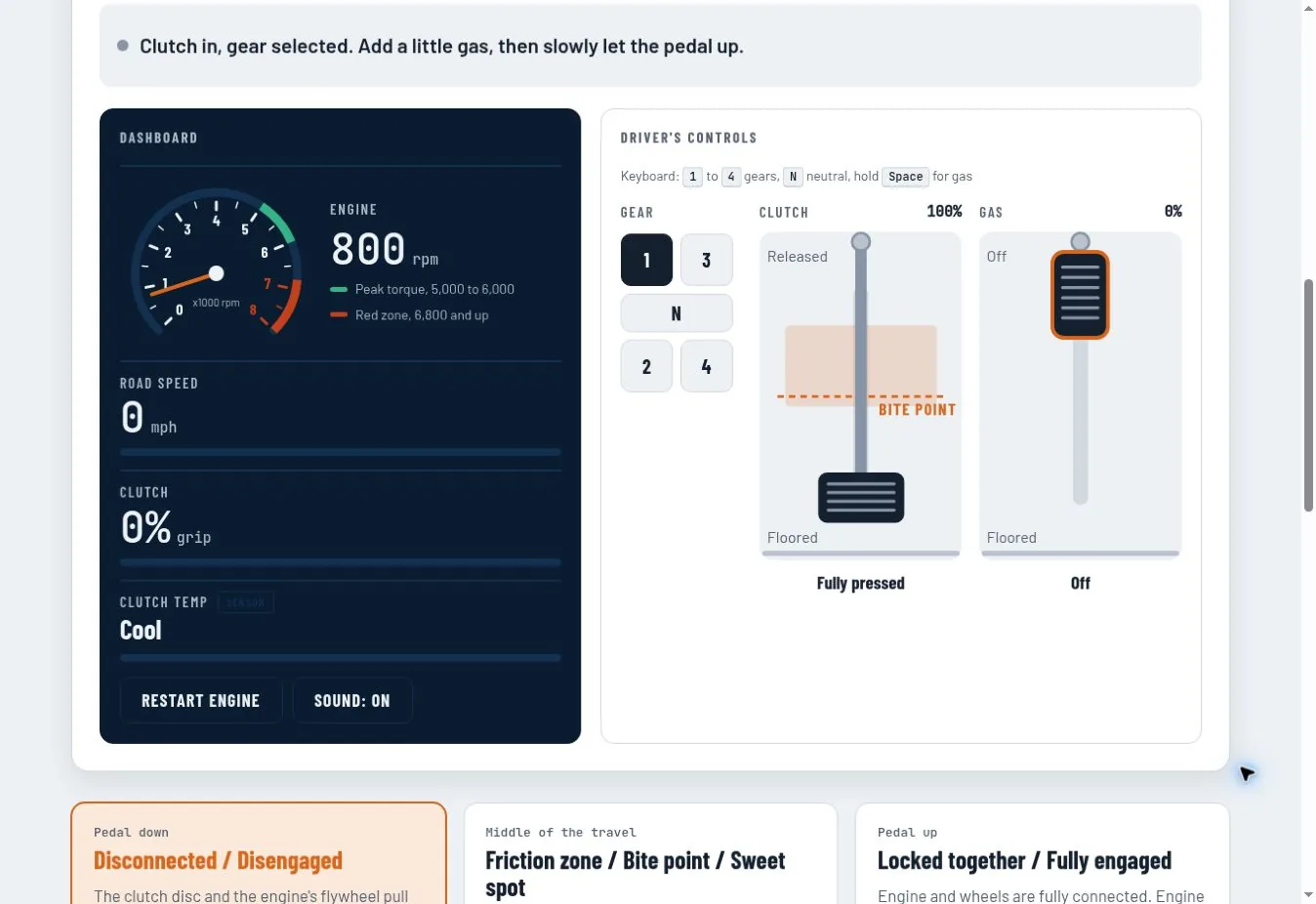
Try the free Clutch Lab simulator to explore engagement before getting into the car. A screen cannot reproduce pedal feel, traffic or judgment, but it can give your practice a clearer purpose.
Decide What Successful Practice Looks Like
Build a checklist: consistent starts, controlled stops, smooth upshifts, appropriate downshifts, reverse, parking and hill starts using a method suited to the vehicle. Practice where it is legal and suitable for your ability, with appropriate supervision. Move into more demanding traffic only when the basics are dependable.
If you only need an introduction before collecting another car, stick shift lessons with Drive Stick Shift may be a simpler first step. If you want an inexpensive manual to keep, instruction followed by regular practice in a sound car can be a useful combination. Learning time varies; no fixed number of hours guarantees readiness for every road.
Is a Beater the Safest Car to Learn In?
Low value can reduce financial anxiety, but it does not make a car safe. Mechanical condition, visibility, seating position and predictable controls matter more than whether you are worried about scratching the paint. A better starting point for many beginners is guided lessons with an instructor who explains how the controls work, helps you practice starts and shifts, and gives immediate feedback. That guidance can help you avoid habits that overheat or prematurely wear the clutch while you build confidence in operating the car.
Should I Buy the Dream Car First?
That can work if the car suits a beginner and you arrange instruction and a sensible pickup plan. An unusually demanding clutch, substantial power or an unfamiliar modified setup can make the learning process harder. Take lessons before collecting the car so an instructor can explain the operating sequence, guide your practice and help you develop smooth clutch control. Get comfortable with the skill before adding unnecessary difficulty, and arrange another driver for collection if you are not ready to drive it home.
Summary: Build the Skill Before Buying the Practice Car
A cheap manual can make sense if you want to keep it, it passes an independent inspection and you can afford its full ownership cost. If your main goal is to learn stick shift, start with instructor-led lessons and guided practice. Learn how to operate the controls, build consistent starts and shifts, and reduce avoidable clutch wear. Then decide whether buying a separate practice car still adds enough value.

